FYI, an LLM is not a database.
A large language model generates text using patterns learned during training and the information supplied with a request. A product built around it may add search, memory, and tools.
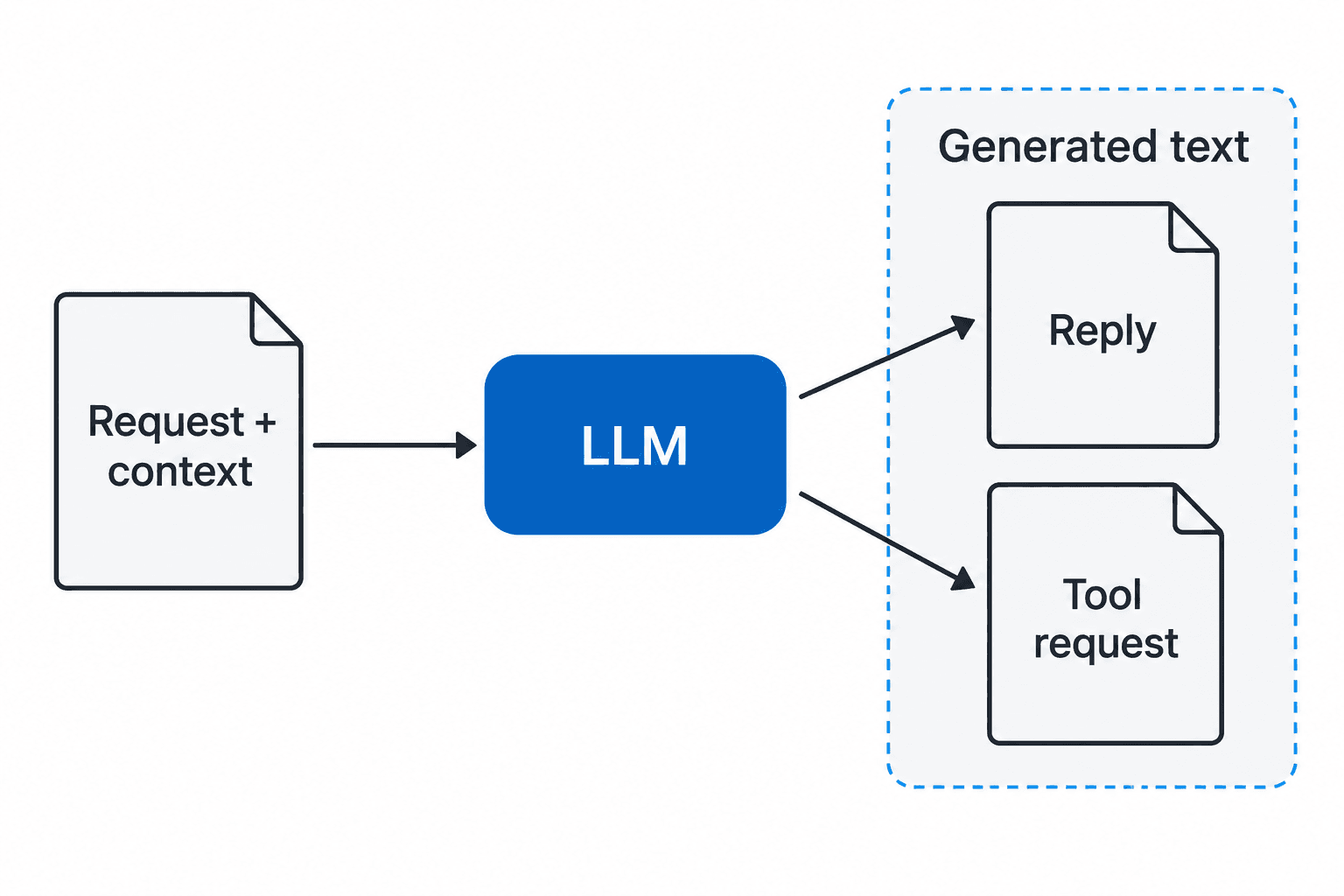
An LLM produces an output. If that output requests a tool, surrounding software still has to run the tool and return its result.
View diagramSee it happen
Your request“Find a quiet restaurant for two at 7.”
The model proposes a search.
It turns your request into a tool request. Generating that request does not check any real availability.
Search restaurants · 2 people · 7 pm · quiet
A language model generates the next response, which can include a request to use a tool.
Scripted illustration, not a live AI result. No real search or booking takes place.
One everyday example
Take this fictional request: “Find a quiet restaurant for two at 7.”
An LLM can interpret the request and propose a search. If connected software supplies search results, the model can compare them and produce a recommendation. The model generating a search request is not the same as a search actually running.
Live table availability must come from somewhere: a booking service, an up-to-date result, or information you provide. A sentence saying “there is a table” does not, by itself, establish that one exists. Nothing in this example makes a real reservation.
A common mix-up
An LLM is not a database that retrieves an exact stored answer to every question. Training changes the model's numerical parameters; answering generates an output from those parameters and the current input. Models can reproduce facts, but that is different from verifying a record against a current source.
Nor is the model the whole chat product. The interface, saved preferences, web search, and permission checks are surrounding software.
Why it matters
Separate generating an answer from checking an answer. Ask where a time-sensitive fact came from, and inspect the source when it matters.
For the restaurant request, look for an actual availability result before accepting a recommendation. For an email draft, you may mainly need to review the wording. Different tasks need different checks—not automatic distrust of everything the model produces.