FYI, an agent can choose what happens next.
An AI agent is a system that uses a model to choose steps and tools while working toward a goal. Results from one step can change what it does next, within the permissions and limits of the surrounding software.
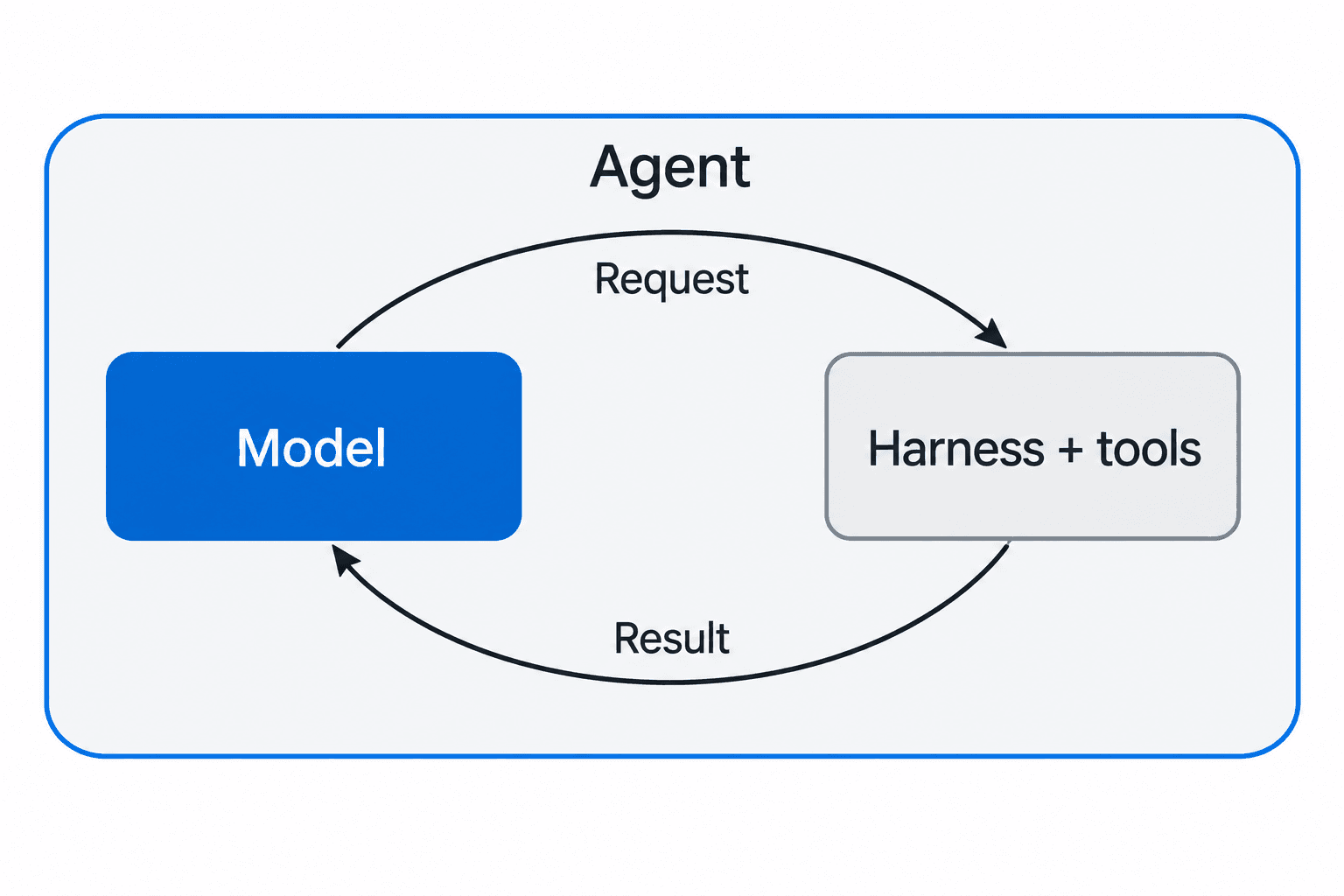
The agent is the whole loop. A model proposes what to do next; the harness runs permitted tools and returns results. The loop may repeat, finish, ask for input, or stop.
View diagramSee it happen
Your request“Find a quiet restaurant for two at 7.”
The agent uses the result to choose what comes next.
The model can request another check or respond to you. Here, it has enough information to ask before taking action.
Juniper has a table at 7. Would you like me to book it?
The agent is the whole loop—not a third component added after the model and harness. It can repeat until it finishes, asks for help, or stops.
Scripted illustration, not a live AI result. No real search or booking takes place.
The same request, more than one step
In our fictional example, the request is “Find a quiet restaurant for two at 7.”
The model proposes a search. The surrounding software runs the permitted tool and returns fictional restaurant information. The next step depends on that result: check availability, try another option, or ask you to clarify what counts as quiet.
The process repeats until there is a useful answer, a limit is reached, or human input is needed. In this example, the system asks before booking. The demonstration is scripted; it does not call a live model or reserve a table.
A common mix-up
“Agent” does not mean “fully autonomous.” A system can select several search steps while still requiring your permission to make a reservation.
The word also has no single universal boundary. Here, it means a system where the model can influence the sequence of steps. A fixed workflow follows a predefined sequence, even if some steps use an LLM. A chat interface alone tells you little about which approach is underneath.
Why it matters
Ask what the system can actually do, not just whether it is called an agent. Can it search, send, book, or spend? Where must it pause?
For our restaurant example, choosing another search and committing to a booking are different permissions. A useful product makes that distinction visible before an action happens.